The Hidden Cost of Late Season Ice Events: Why Bulk Salt Supply Still Matters in March and April
Late season ice events are one of the most underestimated risks for commercial property owners in the Midwest. In Northeast Ohio especially, March and even early April can bring sudden freeze thaw cycles, overnight temperature drops, and dangerous black ice conditions. While many businesses assume winter is over, late season ice events continue to create serious liability exposure, costly slip and fall claims, and operational disruptions.
For commercial facilities, property managers, municipalities, contractors, and distribution centers, the hidden cost of late season ice events goes far beyond the price of bulk salt. The real cost includes lawsuits, insurance premium increases, damaged reputations, employee injuries, lost productivity, and emergency salt purchases at inflated rates.
Understanding the financial impact of late season ice events is critical for any organization responsible for maintaining safe parking lots, sidewalks, loading docks, and high traffic commercial properties.
Why Late Season Ice Events Are More Dangerous
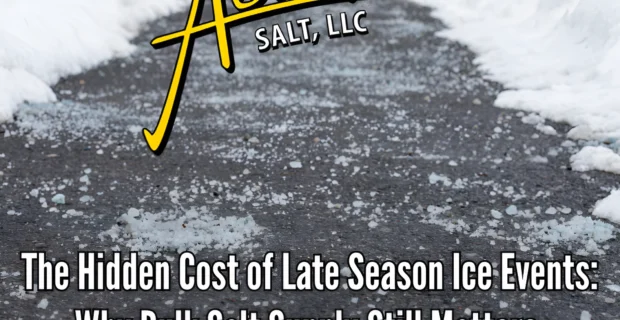
Late season ice events are often more hazardous than mid winter storms. During March and April, daytime temperatures frequently rise above freezing before dropping sharply overnight. This freeze thaw cycle creates nearly invisible black ice across asphalt and concrete surfaces. When businesses scale back their ice management strategy too early, these surfaces go untreated.
Black ice formation during late season ice events is a leading cause of slip and fall accidents. Commercial property owners face significant premises liability risk when walkways and parking lots are not properly treated with bulk road salt or commercial deicing salt. Courts often evaluate whether a business acted reasonably to prevent foreseeable hazards. In Northeast Ohio, late season ice is entirely foreseeable.
The Cost of Slip and Fall Claims
The average slip and fall settlement can reach tens of thousands of dollars. Severe cases involving fractures, head injuries, or long term disability can cost significantly more. Beyond settlement amounts, businesses face legal fees, insurance deductibles, increased premiums, and lost management time.
Late season ice events frequently catch organizations off guard. When bulk salt inventory is depleted or contracts are canceled prematurely, response times slow. Emergency salt sourcing can be expensive and unreliable. Delayed treatment increases exposure to slip and fall claims, workers compensation claims, and third-party liability claims.
A consistent bulk salt supply throughout March and April dramatically reduces risk exposure. Preventative deicing is significantly more affordable than litigation.
Emergency Salt Pricing and Supply Shortages
One of the hidden costs of late season ice events is emergency bulk salt pricing. When a surprise ice storm hits after many suppliers have reduced inventory, demand spikes quickly. Contractors and property managers scramble to secure deicing salt. Prices rise due to limited supply and increased transportation costs.
Businesses without secured bulk salt contracts often pay premium rates for last minute deliveries. In some cases, salt availability becomes restricted, forcing facilities to ration application rates. Insufficient deicing coverage increases safety hazards.
Maintaining a reliable bulk salt contract with a trusted supplier like Abraxus Salt protects organizations from price volatility, supply shortages, and last minute scrambling. Contracted bulk road salt ensures stable pricing, reliable logistics, and consistent inventory through the full ice season.
Operational Disruptions and Productivity Loss
Late season ice events do not only create safety risks. They disrupt operations. Distribution centers may experience shipping delays. Retail businesses see reduced customer traffic. Office complexes face employee absenteeism. Industrial sites risk forklift accidents in untreated loading zones.
The cost of delayed operations during a late season ice event can exceed the cost of seasonal bulk salt management. When parking lots and entrances remain untreated, customers may choose competitors with safer access. Employees may call off work due to unsafe walking conditions.
Investing in consistent deicing salt application and maintaining adequate bulk salt supply supports uninterrupted business continuity.
Infrastructure Damage from Freeze Thaw Cycles
Freeze thaw cycles in March and April accelerate pavement deterioration. Water seeps into cracks during warmer daytime temperatures and expands when it refreezes overnight. This expansion widens cracks, increases pothole formation, and weakens asphalt structure.
Proper bulk salt and deicing management reduces prolonged ice bonding to pavement surfaces. While salt itself must be used responsibly, controlled and strategic application prevents thick ice layers that contribute to surface damage. Late season neglect often results in more aggressive ice formation, which can worsen infrastructure wear.
Property owners who maintain proactive ice management strategies throughout late season ice events often experience lower long term pavement repair costs.
Insurance and Risk Management Implications
Insurance carriers closely evaluate winter risk management practices. Businesses that demonstrate consistent snow and ice management protocols, documented salt application logs, and reliable bulk salt contracts are viewed more favorably. Gaps in coverage or early termination of ice control services can increase risk ratings.
Late season ice events are common enough in Northeast Ohio that risk managers should plan for them annually. Maintaining bulk road salt inventory through April shows due diligence and proactive hazard mitigation.
Abraxus Salt works with commercial clients to ensure steady bulk salt supply, dependable delivery schedules, and predictable budgeting throughout the entire winter season, including late season ice events.
Why March Is Not the Time to Scale Back
Weather data consistently shows measurable snowfall and freezing temperatures in March across Ohio. Ice events frequently occur even when snowfall totals are low. Light precipitation followed by temperature drops can create widespread black ice with minimal warning.
Canceling a bulk salt contract too early may provide short term savings, but it exposes businesses to significant financial risk. The hidden cost of late season ice events far outweighs the marginal savings of reducing salt inventory prematurely.
Proactive property managers understand that winter risk does not end on the calendar. It ends when temperatures stabilize consistently above freezing overnight.
Strategic Planning for Future Ice Seasons
Late season ice events also provide an opportunity for strategic evaluation. Reviewing bulk salt usage, delivery efficiency, and response times helps organizations improve planning for the next season. Locking in bulk road salt contracts early often provides better pricing stability and guaranteed tonnage allocation.
Partnering with an experienced bulk salt supplier like Abraxus Salt ensures professional guidance, reliable logistics, and consistent product quality. Commercial grade bulk salt, stored and delivered properly, remains one of the most effective and economical tools for ice management.
The True Cost Comparison
When evaluating the hidden cost of late season ice events, consider this comparison:
The cost of maintaining bulk salt supply through March and April is predictable and budgeted.
The cost of one slip and fall lawsuit is unpredictable and potentially devastating.
The cost of emergency bulk salt procurement during a shortage is inflated.
The cost of lost business due to unsafe property conditions is immeasurable.
Reliable bulk salt management is a risk mitigation strategy, not merely a winter expense.
Late season ice events are a consistent reality in Northeast Ohio. Freeze thaw cycles, black ice formation, and sudden temperature drops create significant hazards well into March and April. The hidden cost of late season ice events includes liability claims, emergency salt pricing, operational disruptions, infrastructure damage, and increased insurance risk.
Maintaining a dependable bulk salt supply and securing a comprehensive bulk road salt contract protects commercial properties from preventable financial loss. Abraxus Salt provides reliable bulk salt delivery, stable pricing, and consistent service to ensure businesses remain protected throughout the entire ice season.
Do not let calendar fatigue dictate risk management decisions. Late season ice events are predictable. The costs of being unprepared are not.